Phase 5. Validation & Iterative Testing
Phase 5. Validation & Iterative Testing
Constant Tweaking & Real-world Feedback
Constant Tweaking & Real-world Feedback
Constant Tweaking & Real-world Feedback
Constant Tweaking & Real-world Feedback
The Philosophy of Iteration: Nothing was set in stone. I treated the initial high-fidelity designs as hypotheses that required rigorous validation. By focusing on "improving step-by-step," I leveraged real-world feedback to strip away remaining friction and optimize the system for high-stakes industrial performance.
The Philosophy of Iteration: Nothing was set in stone. I treated the initial high-fidelity designs as hypotheses that required rigorous validation. By focusing on "improving step-by-step," I leveraged real-world feedback to strip away remaining friction and optimize the system for high-stakes industrial performance.
Identifying Friction
Identifying Friction
Initial usability testing revealed that while the core dashboard was intuitive, mission-critical elements required further cognitive optimization.
Initial usability testing revealed that while the core dashboard was intuitive, mission-critical elements required further cognitive optimization.
The Discovery:
The Discovery:
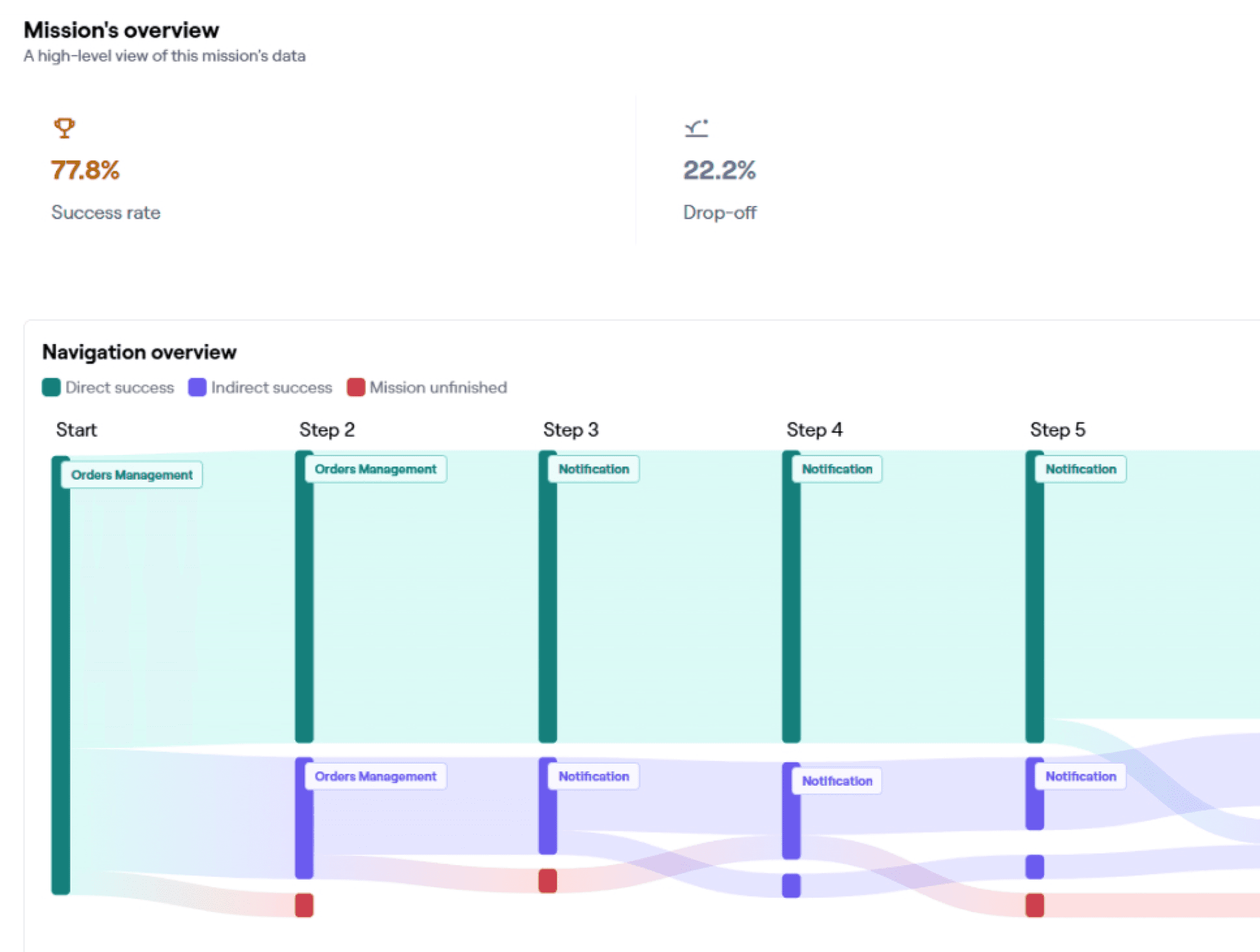
Data indicated a significant user drop-off during specific task flows.
Data indicated a significant user drop-off during specific task flows.
The "Symptom":
The "Symptom":
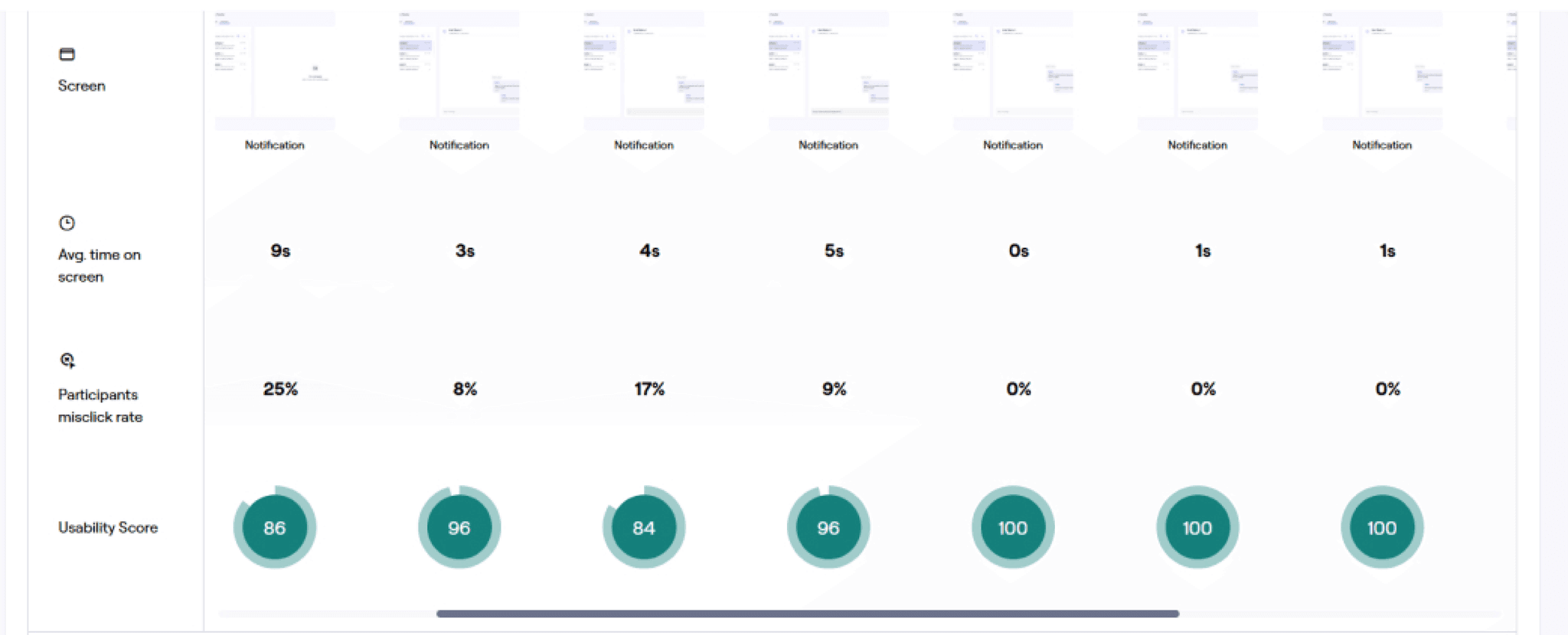
Operators struggled to locate primary action buttons, identifying a need for stronger visual cues and improved spatial placement.
Operators struggled to locate primary action buttons, identifying a need for stronger visual cues and improved spatial placement.
The Cognitive Gap:
The Cognitive Gap:
Notification prioritization was not distinct enough for noisy, fast-paced factory environments, leading to potential "alert fatigue".
Notification prioritization was not distinct enough for noisy, fast-paced factory environments, leading to potential "alert fatigue".
Evidence-Based Refinement
Evidence-Based Refinement
Based on these insights, I revisited the ideation phase to refine the interface logic.
Based on these insights, I revisited the ideation phase to refine the interface logic.
Notification Center Relocation:
Notification Center Relocation:
Moved the notification hub to the main navigation menu to ensure constant visibility and instant access
Moved the notification hub to the main navigation menu to ensure constant visibility and instant access
Visual Cue Optimization:
Visual Cue Optimization:
Redesigned button hierarchy and placement to align with natural scanning patterns, eliminating "search time" for primary actions.
Redesigned button hierarchy and placement to align with natural scanning patterns, eliminating "search time" for primary actions.
Flow Streamlining:
Flow Streamlining:
Adjusted user flows to minimize the number of interactions required for emergency responses.
Adjusted user flows to minimize the number of interactions required for emergency responses.
The Quantitative Proof
The Quantitative Proof
Metric
Outcome
Notification Accessibility
Strategic relocation led to a measurable increase in alert discovery and response speed.
Task Completion Rates
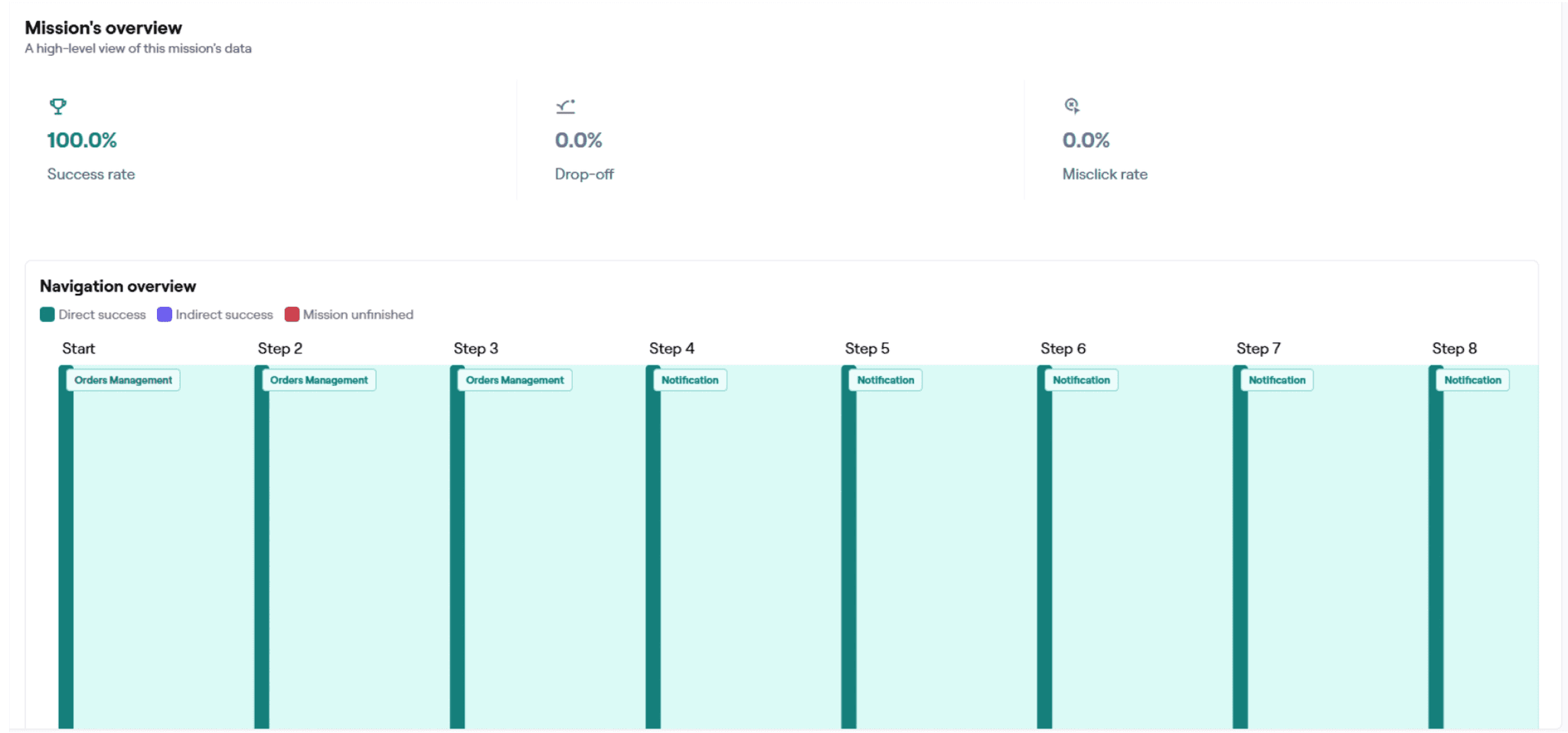
Subsequent testing showed a significant reduction in drop-off rates across all core monitoring tasks.
User Satisfaction
Qualitative feedback confirmed that the updated interface felt more intuitive, reliable, and professional.
Metric
Outcome
Notification Accessibility
Strategic relocation led to a measurable increase in alert discovery and response speed.
Task Completion Rates
Subsequent testing showed a significant reduction in drop-off rates across all core monitoring tasks.
User Satisfaction
Qualitative feedback confirmed that the updated interface felt more intuitive, reliable, and professional.